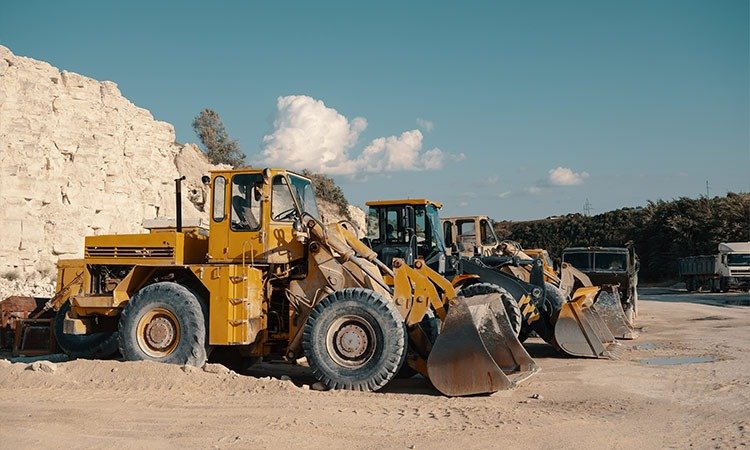
A Step-by-Step Guide to Exporting Heavy Machinery
Exporting heavy machinery is one of those operations that looks manageable on paper but quickly becomes one of the most complex undertakings in global trade. Whether you are shipping excavators to a mining site in South America or moving industrial presses to a manufacturing facility overseas, the margin for error at every stage is razor-thin.
One missed document, one overlooked regulation, or one poorly secured load can snowball into delays that cost thousands of dollars a day and, in the worst cases, leave your equipment stranded at a foreign port.
That said, none of this is unmanageable when you break the process into clearly defined stages. Whether you are navigating your first export or tightening up an existing workflow, the following nine steps lay out what needs to happen, and in what order, to move heavy machinery across borders without the headaches.
Step 1: Understand Export Regulations and Licensing Requirements
Everything starts with regulations, and getting this wrong at the outset can derail the entire shipment. In the United States, the Bureau of Industry and Security (BIS) administers the Export Administration Regulations (EAR), which classify goods and determine whether you need an export license. Certain machinery, particularly that with dual-use applications in defense or advanced manufacturing, falls under restricted categories requiring formal approval.
Your first move is to identify the machinery’s Export Control Classification Number (ECCN) and cross-reference the destination against sanctioned nations lists from the Office of Foreign Assets Control (OFAC). If a license is required, the application can stretch from weeks to months, so building that lead time into your plan from day one is essential.
Step 2: Prepare Accurate Export Documentation
Once the regulatory picture is clear, documentation becomes your next priority, and arguably where most export delays actually originate. You will need a commercial invoice detailing the equipment’s value, description, and Harmonized System (HS) tariff code, along with a packing list specifying dimensions, weight, and contents of each shipping unit.
Depending on the destination, requirements can expand to include a certificate of origin, a bill of lading, an Electronic Export Information (EEI) filing through the Automated Export System (AES), and destination-specific import permits.
What makes documentation unforgiving here is the detail involved. A small discrepancy between declared weight and actual weight at port can trigger an inspection that holds your shipment for days. Having an experienced freight coordinator review every form before submission pays for itself many times over.
Step 3: Inspect, Clean, and Prepare the Machinery
With your paperwork in order, attention turns to the machinery itself. Many countries enforce strict biosecurity standards on imported equipment. Australia, New Zealand, and several African nations require machinery to be thoroughly cleaned and free of soil, plant matter, and biological residue before entry. Failing those standards can result in quarantine holds, forced port cleaning at your expense, or outright refusal of entry.
Beyond cleaning, conduct a full mechanical inspection to document the equipment’s condition prior to shipment for damage claims. Drain all fluids for hazardous materials compliance, disconnect batteries, retract booms and arms, and fold down protruding components to reduce the dimensional profile. Photographic records at this stage serve as both a compliance measure and an insurance safeguard.
Step 4: Choose the Right Transport Mode and Carrier
Now that the machinery is export-ready, the next decision is how to get it there. Ocean freight is the most common choice, largely because it handles oversized and over-weight cargo that no other mode can match. Roll-on/roll-off (RoRo) vessels are well-suited for self-propelled equipment such as bulldozers and wheel loaders, while flat-rack and open-top containers are well-suited for static or irregularly shaped machinery. Air freight remains an option for urgent shipments, though the cost makes it impractical for most heavy equipment.
Regardless of the mode, the carrier you partner with matters just as much as the vessel itself. Working with a logistics provider that specializes in heavy equipment transport ensures you have a team that understands how to secure over-dimensional loads, navigate port logistics, and coordinate multimodal transfers when inland transit is required on either end of the journey.
Step 5: Secure Proper Packaging and Crating
It is easy to assume that equipment built for harsh job-site conditions will hold up fine in transit, but that assumption has cost more than a few exporters dearly. Ocean shipping subjects cargo to vibration, saltwater exposure, humidity, and shifting forces that can damage hydraulic systems, electronics, and precision components before the machinery reaches its destination.
For containerized shipments, custom-built wooden crates or steel frames anchored at multiple tie-down points provide the structural security you need, while vapor corrosion inhibitor (VCI) wrapping protects exposed metal. For flat-rack shipments, heavy-duty ratchet straps, chains, and welded securing points are standard, and calculating the cargo’s center of gravity helps ensure the load stays stable in rough seas.
Step 6: Obtain Cargo Insurance
Even with the best packaging and the most experienced carrier, transit risk never drops to zero, which is exactly why cargo insurance is non-negotiable. Standard carrier liability covers only a fraction of the machinery’s actual value, and when a single excavator can be worth several hundred thousand dollars, that gap can be devastating.
Work with an insurer experienced in heavy equipment to secure an all-risk policy covering the full replacement value across the entire transit chain, from inland transport and port handling to ocean carriage. Keep the insurance certificate accessible throughout, because customs authorities at the destination often request it during clearance.
Step 7: Manage Inland Transport to the Port of Exit
Before your machinery reaches open water, it has to get to the port, and this leg is often the most logistically demanding of the entire chain. Oversized loads may require lowboys, multi-axle hydraulic platforms, or removable gooseneck trailers, while the route needs to be surveyed for bridge weight limits, overhead clearances, road restrictions, and permit requirements in every jurisdiction along the way.
This is where working with a provider that lives and breathes heavy haul logistics makes a measurable difference. Bear Down Logistics, for example, has built its reputation around coordinating exactly these kinds of complex inland moves across the United States, handling everything from multi-state permit acquisition and escort vehicles to police coordination and real-time route monitoring.
Their experience with over-dimensional and super-load freight means they understand the variables that trip up general carriers, which is the kind of specialized knowledge that keeps an export timeline from falling apart before the machinery ever reaches the port.
Step 8: Clear Customs and Handle Port Procedures
Once the machinery reaches the port, the focus shifts to export customs clearance. Your customs broker or freight forwarder will file the EEI through AES, present all required documentation, and shepherd the shipment through inspection.
Some ports conduct random physical inspections, so making sure the machinery is accessible and every document matches the actual shipment will save you from unnecessary holdups.
Port handling adds another layer. Heavy machinery often requires specialized cranes, forklifts, and rigging teams, and if these are not arranged in advance with the terminal operator, delays cascade through the shipping schedule. A quick call weeks before loading is far cheaper than a missed vessel.
Step 9: Track the Shipment and Prepare for Destination Clearance
With the machinery loaded and en route, the job is not done yet. Monitor the shipment through your carrier’s tracking system to stay ahead of delays and prepare for arrival. Your overseas agent or consignee will need copies of all export documentation, the insurance certificate, and any compliance forms required by local customs.
Import duties, taxes, and inspection protocols vary widely by country. Certain nations require pre-shipment inspection certificates before cargo departs, while others mandate that used equipment meet specific emissions or safety standards. Identifying these requirements early is always less expensive than resolving them after the machinery is sitting on a dock halfway around the world.
Getting It Right the First Time Saves More Than Money
Exporting heavy machinery is ultimately a test of how well you plan before the first truck rolls. Every step in this process builds directly on the one before it, and skipping or rushing any single phase introduces risk that compounds as the shipment travels farther.
The exporters who consistently get this right treat each shipment as a project with defined milestones, accountable parties, and contingency plans from the beginning. It takes more effort upfront, but the payoff is clear: equipment arrives intact, on time, and on budget, and the business relationships on the other end stay strong because of it.