Do You Need National Press Coverage for the O-1 Visa?
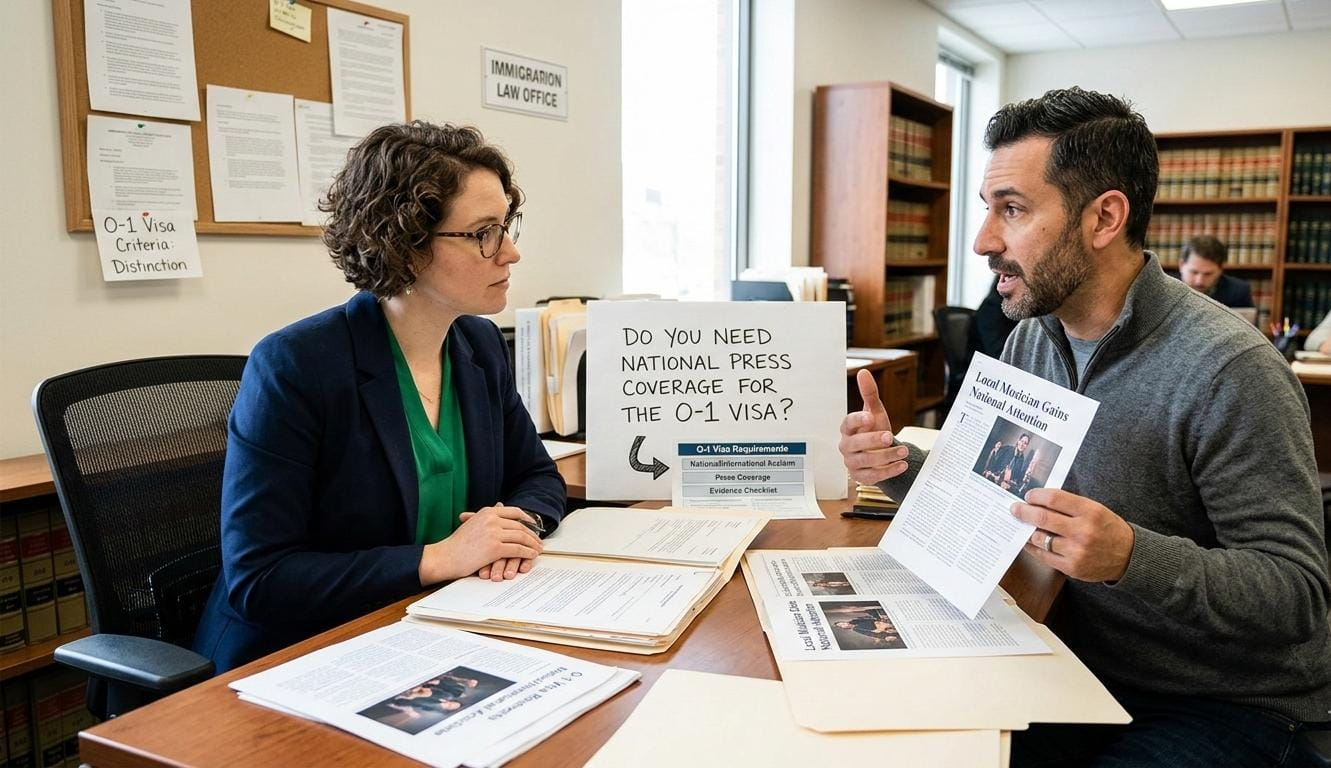
Many professionals applying for the O-1 visa worry that they must appear in major national newspapers or television outlets to qualify. While media recognition can certainly strengthen a petition, national press coverage is not always required. The O-1 visa focuses on demonstrating extraordinary ability in your field, and this can be proven through several different types of evidence. Understanding how press coverage fits into the eligibility criteria can help applicants prepare a stronger case. In many situations, consulting an experienced O1 Visa Lawyer can also help determine whether your media recognition meets the requirements.
Understanding the O-1 Visa Media Criterion
One of the official criteria for the O-1 visa involves submitting published material about the applicant in major media or major trade publications. This requirement is intended to show that the applicant has received recognition from reputable sources within their industry or the broader public.
However, the phrase major media does not necessarily mean that the coverage must come from well-known national outlets such as large television networks or global newspapers. Instead, the immigration authorities evaluate the credibility, reach, and influence of the publication where the material appears.
For example, a respected regional newspaper with hundreds of thousands of readers could still qualify as major media. Similarly, an established online platform or digital magazine with a strong audience in a particular field may also meet the standard. An experienced O1 Visa Lawyer can help analyze whether a particular publication qualifies under immigration guidelines.
Role of Industry Publications
In many professional industries, trade publications and niche media outlets carry significant authority. These publications are often read by experts, decision-makers, and professionals who work directly within the field.
For instance, a technology entrepreneur may be featured in a well-known tech industry blog, while a fashion designer may appear in a respected fashion magazine. Even though these outlets may not be household names for the general public, they can still carry significant influence within their specific industries.
Because the O-1 visa focuses on recognition within your field, industry publications can sometimes be even more valuable than general news outlets. They show that the applicant’s work is being noticed and discussed by professionals who understand the importance of their contributions.
The Value of Strong Article Content
While the reputation of the publication is important, the content of the article itself is equally crucial. Immigration officers reviewing an O-1 petition will examine whether the article genuinely focuses on the applicant and their achievements.
Strong evidence usually includes articles that discuss the applicant’s work in detail. This might include interviews, professional profiles, project reviews, or feature stories that highlight the individual’s accomplishments and contributions to the field.
On the other hand, brief mentions or small references in a larger article may not carry as much weight. For example, being listed in project credits or mentioned in passing within a news story usually does not satisfy the requirement for meaningful published material. USCIS generally looks for coverage that clearly explains why the applicant’s work is significant or noteworthy.
Demonstrating the Influence of the Publication
When using media coverage as evidence, it is also important to demonstrate the reach and credibility of the publication. Immigration officers may look for information such as readership numbers, circulation statistics, website traffic data, or the publication’s reputation within the industry.
Providing this context helps show that the media outlet has meaningful influence and that the recognition is legitimate. This type of supporting evidence can strengthen the petition and make it easier for USCIS to understand the importance of the coverage.
Because evaluating publication credibility can sometimes be complex, many applicants rely on an experienced O1 Visa Lawyer to gather and present this information effectively.
Alternatives to Press Coverage
It is also important to remember that press coverage is only one of several possible O-1 visa criteria. Applicants do not need to satisfy every criterion to qualify. Instead, they must meet a specific number of requirements depending on their field.
Other common types of evidence include receiving prestigious awards, judging the work of others, making significant contributions to the field, holding critical roles in distinguished organizations, or earning a high salary compared to industry standards. In many cases, applicants may qualify through a combination of these factors even if they have limited media coverage.
Final Thoughts
National press coverage is often helpful in an O-1 visa petition, but it is not a strict requirement. What matters most is whether the published material comes from a credible source and clearly highlights the applicant’s achievements and recognition within their field.
Industry publications, regional media outlets, and respected online platforms can all serve as strong evidence if they have meaningful reach and authority. The key is ensuring that the articles genuinely focus on the applicant and demonstrate their professional impact.
Because the rules surrounding media evidence can be complex, working with an experienced O1 Visa Lawyer can be extremely valuable. A qualified attorney can evaluate your press coverage, identify the strongest pieces of evidence, and organize them strategically to present a compelling O-1 visa petition.